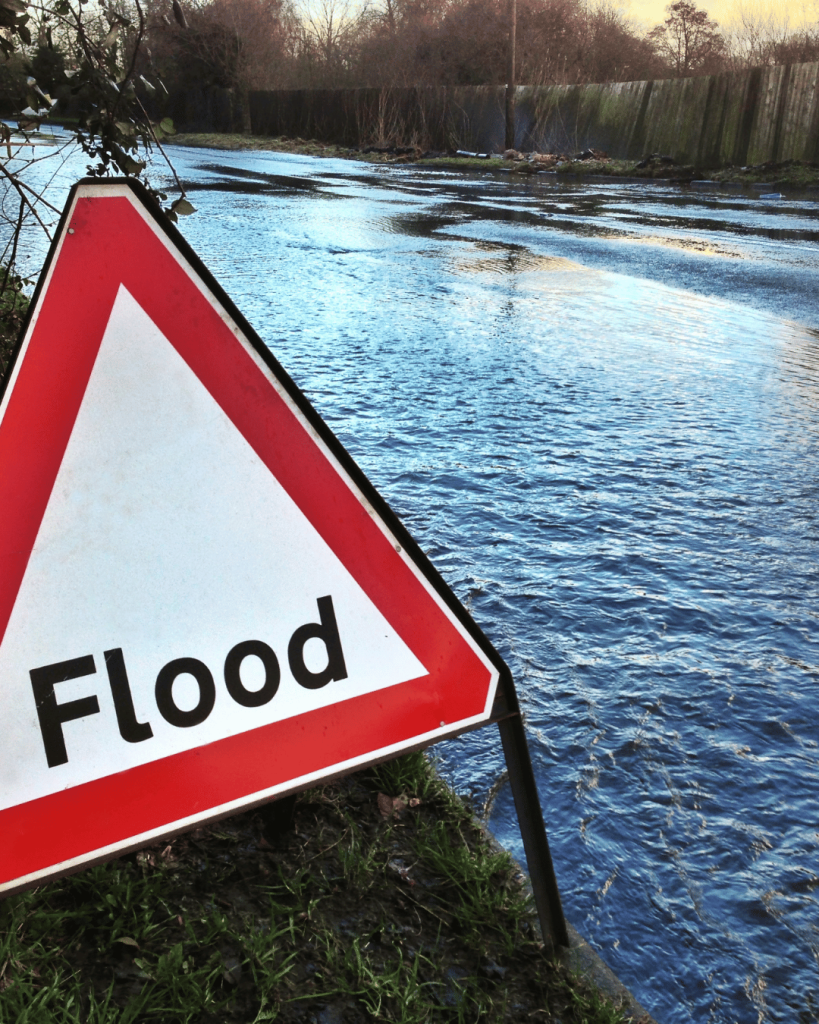
Floods, Fires, and Storms: Why More UK Households Are Turning to Loss Assessors in 2025
October 27, 2025
Brooklin’s 500-Mile Indoor Cycle Raises £790 for The Fire Fighters Charity
December 3, 2025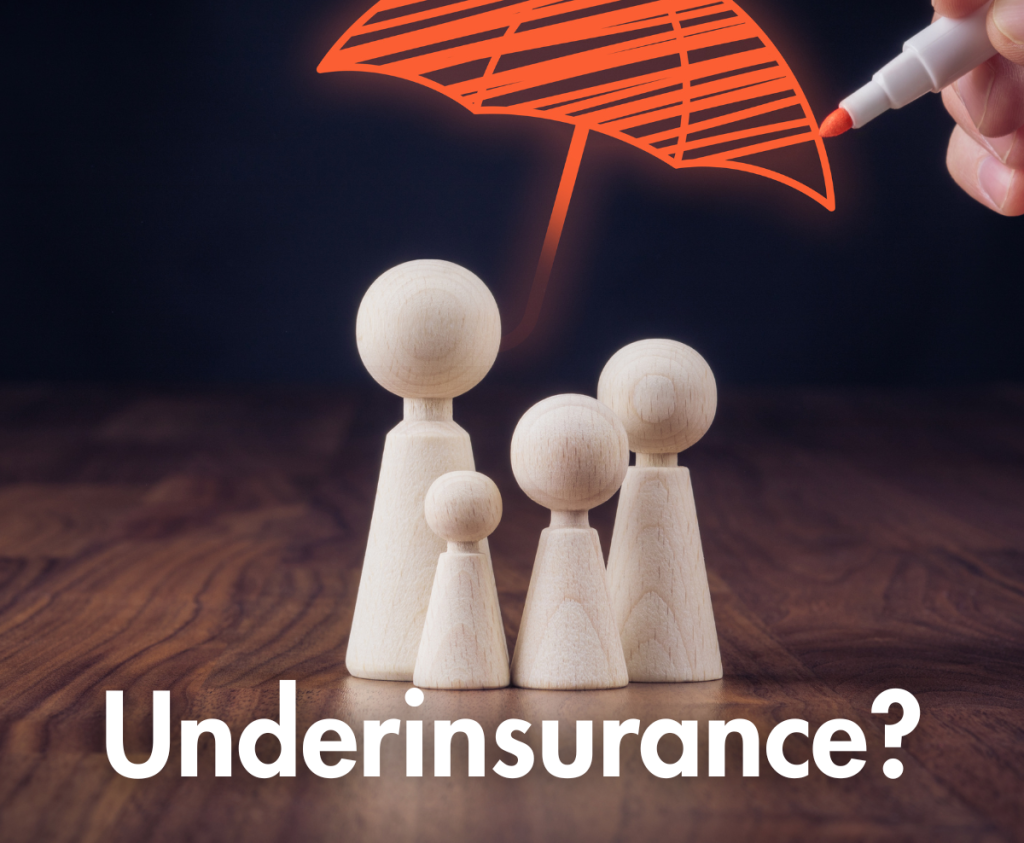
Introduction
Imagine the worst has happened: a fire, flood, or significant storm damage has left your home in ruins. You file a claim, relieved that your insurance will cover the cost of rebuilding your life. But then the assessment comes back, and the payout is tens of thousands of pounds short of what you need. This is the devastating reality of underinsurance, a hidden insurance crisis quietly affecting millions of UK households.
Recent industry reports warn that a large proportion of UK homes are underinsured, leaving many households financially exposed when they need support the most. In 2025, this issue is more critical than ever. Spiralling construction costs, new energy regulations, and increasingly volatile weather patterns are creating a perfect storm where standard home insurance policies may no longer be adequate. This guide will explain exactly what underinsurance is, why it happens, and the practical steps you must take to protect your most valuable asset.
What Exactly Is Underinsurance?
Underinsurance occurs when the sum insured on your home insurance policy—the maximum amount your insurer will pay out—is less than the true cost to completely rebuild your property from the ground up. This figure is not the market value of your home; it is the Rebuild Cost.
For example, if an expert assessment determines it would cost £400,000 to rebuild your home after a total loss, but your buildings insurance only covers you for a sum insured of £300,000, you are underinsured by £100,000 (or 25%). In the event of a major claim, you would be personally responsible for covering that significant shortfall.
Why Market Value and Rebuild Cost Are Different
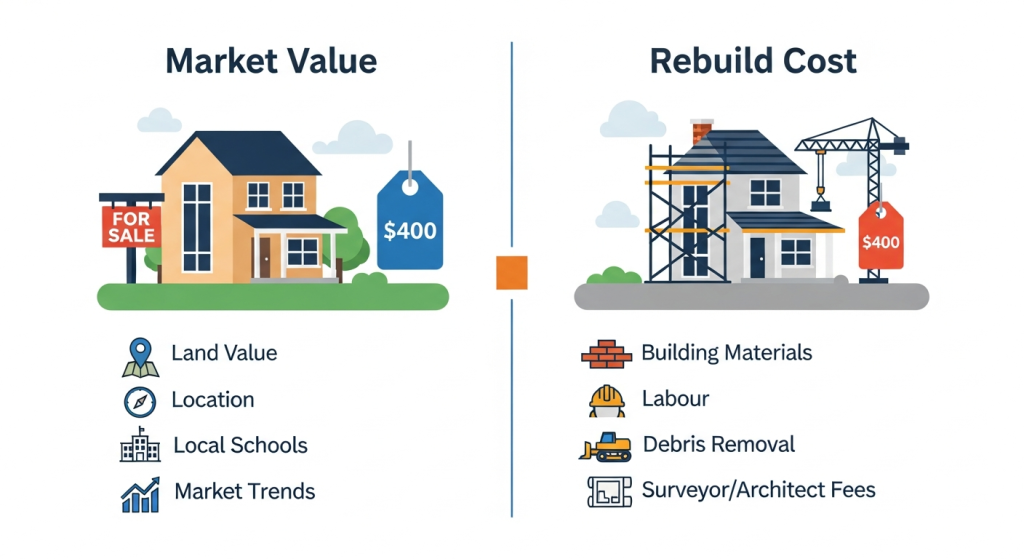
The key difference: Market Value is the sale price of your property (including land), while Rebuild Cost is the price to reconstruct the building alone.
One of the most common and costly mistakes homeowners make is confusing a property’s market value with its rebuild value. They are two fundamentally different calculations.
- Market Value: This is the price your home would likely sell for on the open market. It is influenced by factors like the value of the land, your property’s location, local school performance, and current housing market trends. Land can account for a huge portion of the market value, but it is not a factor in your buildings insurance because the land remains even if the house is destroyed.
- Rebuild Cost (or Reinstatement Cost): This is the total cost of labour and building materials required to reconstruct your home to its exact state before it was damaged. This includes costs for demolition, debris removal, site access, architectural drawings, surveyor costs, and complying with the latest building regulations. Your property insurance is designed to cover this, not the sale price.
Relying on the purchase price or an estate agent’s valuation for your sum insured is a direct path to underinsurance.
How Underinsurance Affects Your Claims
The consequences of being underinsured become painfully clear during the claim process. Insurers often include a condition in the policy documents known as the “average clause” or the “pro rata condition of average.” This clause is designed to prevent people from deliberately under-insuring to save on premiums.
Here’s how it works in practice. Let’s use our previous example:
- Correct Rebuild Cost: £400,000
- Your Sum Insured: £300,000 (You are insured for 75% of the true value)
- Cost of Repairs for a Claim: £80,000
You might assume your insurer will pay the full £80,000 since it’s well below your £300,000 limit. However, due to the average clause, the insurer will only pay a percentage of your claim equal to the percentage you are insured for.
Calculation: (£300,000 Sum Insured / £400,000 Rebuild Cost) x £80,000 Claim = £60,000 Payout
You would be left to find the remaining £20,000 yourself. For a total loss, the shortfall would be a staggering £100,000. These case studies highlight how a simple oversight can lead to financial catastrophe.
Common Causes of Underinsurance Among UK Homeowners
Underinsurance rarely happens overnight. It’s typically the result of gradual changes, outdated information, and a “set it and forget it” approach to one’s insurance policy.
1. Not Updating Your Policy Regularly
The cost of building materials and labour is constantly changing. If you haven’t reviewed your home insurance policies for several years, your sum insured is almost certainly out of date. While some policies include index linking—an automatic annual adjustment to account for inflation—this may not be sufficient to keep pace with the rapid increases in rebuilding costs seen recently, influenced by events like the Russia-Ukraine war and supply chain disruptions.
2. Relying on Online Valuation Tools Alone
Free online rebuild calculators can offer a rough estimate, but they are no substitute for a professional assessment. These tools use generic data and cannot account for your home’s specific characteristics, such as specialist materials, a complex design, difficult site access, or local labour rates. Basing your entire property insurance coverage on a generic estimate is a significant gamble.
3. Ignoring Home Improvements and Extensions
Any significant renovation work, from a new kitchen or loft conversion to building an extension, will increase your property’s rebuild value. Many homeowners complete these projects but forget to inform their insurer. This failure to update your coverage level means the added value of your home is completely uninsured, creating an immediate underinsurance gap.
4. Misunderstanding What’s Covered
It’s vital to understand the distinction between buildings insurance and contents insurance. Buildings cover protects the structure of your home (walls, roof, floors), while contents insurance protects your possessions inside. Furthermore, many standard policies have a single article limit, meaning any high-value items like jewellery, art, or prestige watches may require separate cover. Failing to account for everything—including outbuildings, garden walls, and driveways—can leave parts of your property unprotected.
How to Calculate the Correct Rebuild Cost
Ensuring your sum insured is accurate is the single most important step in preventing underinsurance.
Here is a structured approach to getting it right.

Use Professional Valuation Services
The most reliable method is to commission a formal rebuild cost assessment from a qualified professional. Engaging a chartered surveyor or an RICS-regulated valuation company provides a detailed, evidence-based report that considers every aspect of your property. This professional valuation is the gold standard for accuracy.
Check for Local Building Cost Variations
Construction costs are not uniform across the country. Labour and material prices can be significantly higher in London and the South East compared to other regions. Your assessment must reflect these local conditions to be accurate. A local chartered surveyor will have up-to-date knowledge of these variations.
Include Additional Costs
A comprehensive rebuild cost assessment goes far beyond just bricks and mortar. It must also factor in “hidden” expenses that arise during a rebuild, including:
- Demolition and site clearance
- Professional fees (architects, engineers, surveyors)
- VAT on labour and materials
- Costs associated with complying with new building codes
- Alternative accommodation expenses while your home is uninhabitable
Review Your Policy Annually
Make it a non-negotiable habit to review your insurance policy at every renewal. Check the sum insured against any home improvements you’ve made and the general trend in construction costs. If in doubt, speak to your insurer or an insurance broker.
Signs You Might Be Underinsured
You can often spot the warning signs of underinsurance before it’s too late. Be vigilant for these red flags:
- Your premium has remained static for years, despite widely reported increases in rebuilding costs.
- You have undertaken renovation work or built an extension without updating your insurer.
- Your sum insured is based on your property’s market value or the price you paid for it years ago.
- You have never had a professional rebuild cost assessment conducted.
- Your policy was set up using a generic online calculator and has never been professionally verified.
Steps to Avoid Underinsurance in 2025
Protecting your home from the risks of underinsurance requires a proactive approach. Follow this checklist to ensure your coverage is robust and reliable.
1. Get a Professional Rebuild Valuation
The cornerstone of adequate cover is an accurate valuation. Invest in a Reinstatement Cost Assessment from a RICS-accredited chartered surveyor. This provides a defensible and precise figure to give your insurer, ensuring your sum insured is correct from the start.
2. Inform Your Insurer About Home Improvements
From a new conservatory to upgraded heating systems or eco-friendly features, always notify your insurer of any changes that could affect your home’s rebuild value. Do this as soon as the work is completed, not just at renewal.
3. Review and Update Your Policy Annually
Treat your home insurance renewal as an active process, not an automatic one. Annually review your policy documents, check your coverage levels, and ask your insurer or insurance broker if the sum insured is still appropriate given current inflation.
4. Understand Your Policy Details
Take the time to read your insurance policy. Understand what is and isn’t covered, check for the average clause, and be aware of any excesses or limits. If the jargon is confusing, an independent insurance broker can provide invaluable, impartial advice and help you compare home insurance policies.
5. Consider Inflation Protection
Ask your insurer if your policy includes index linking to automatically increase your sum insured in line with inflation. While helpful, remember this is often based on general indices and may not capture sharp rises in construction-specific costs, so a manual review is still essential.

What to Do If You Discover You’re Underinsured
Realising your coverage is inadequate can be alarming, but it is a problem you can—and must—fix immediately.
Contact Your Insurer Immediately
Get in touch with your insurer or insurance broker straight away. Explain that you believe your sum insured is too low and you wish to increase it. Provide them with any new information you have, such as a professional rebuild cost assessment report or details of recent renovations.
Shop Around for Better Coverage
If your current provider is unhelpful or the new premium seems uncompetitive, don’t be afraid to look elsewhere. An insurance broker can search the market for you to find a policy that offers the right level of cover at a fair price.
Consider Specialist Insurance
If you own a listed building, a home with non-standard construction (e.g., a thatched roof), or a property with very high property values, a standard insurance policy may not be suitable. Specialist insurers offer tailored coverage designed for unique properties.
Why Underinsurance Matters More Than Ever in 2025
The risk of underinsurance has been amplified by a convergence of economic and regulatory pressures, making vigilance in 2025 essential.
Rising Building Costs
Global events, including the pandemic and the Russia-Ukraine war, have severely disrupted supply chains for building materials, causing prices to soar. Combined with persistent labour shortages and general inflation, the cost to build has risen far faster than standard inflation, widening the gap for anyone with an outdated sum insured.
Stricter Building Regulations
The UK is implementing more stringent building codes focused on safety and energy efficiency. Regulations like the Future Homes Standard in England and Scotland’s Heat in Buildings Bill mandate higher standards for insulation, ventilation, and heating systems. While beneficial for the environment, these energy mandates mean that rebuilding a home to today’s codes is significantly more expensive than rebuilding it to the standards of 5 or 10 years ago. These compliance costs must be reflected in your rebuild cost assessment.
Increased Weather Risks
The effects of climate change are leading to more frequent and severe weather events in the UK, from widespread flooding to destructive storms. This increases the likelihood of having to make a major claim on your home insurance. When the risk of a claim is higher, the importance of having adequate coverage becomes paramount.
Final Thoughts
Underinsurance is a serious financial threat lurking within the policy documents of millions of UK homeowners. It can transform the distress of property damage into a long-term financial crisis. However, it is an entirely avoidable problem.
By understanding the critical difference between market value and Rebuild Cost, investing in a professional rebuild cost assessment, and committing to an annual review of your insurance policy, you can eliminate this risk. Your home is your most significant investment; in 2025, take the necessary steps to ensure it is properly protected.
Secure Your Home's Future with Expert Support
Navigating the complexities of property insurance can be daunting, especially when faced with the aftermath of a loss. Don’t let underinsurance jeopardize your financial security and peace of mind. If you are uncertain about your current insurance policy or need expert assistance with the claim process, seeking professional guidance is crucial. An independent loss assessor can work on your behalf to ensure you have the right coverage and can confidently secure the full compensation you are entitled to, safeguarding both your home and your future.
If you’re facing serious damage, you don’t have to go through it alone.
Contact Brooklin Claims Consultants for clear advice and expert support.
For free advice or to discuss your claim, call us on 0800 059 2144 or email info@brooklinclaims.co.uk.